Stories
Explore the decisions behind protein engineering: which system to model, what to design, and which evidence should guide the next experiment.
The collection includes Crane computational studies and walkthroughs of published research. Each story identifies the source of the work, what it establishes, and the questions still open. These are not customer outcomes.
Newest first · 30 entries
Oct 2026
Technical study
Designing a TNF-alpha Binder That Lets Go in the Acid
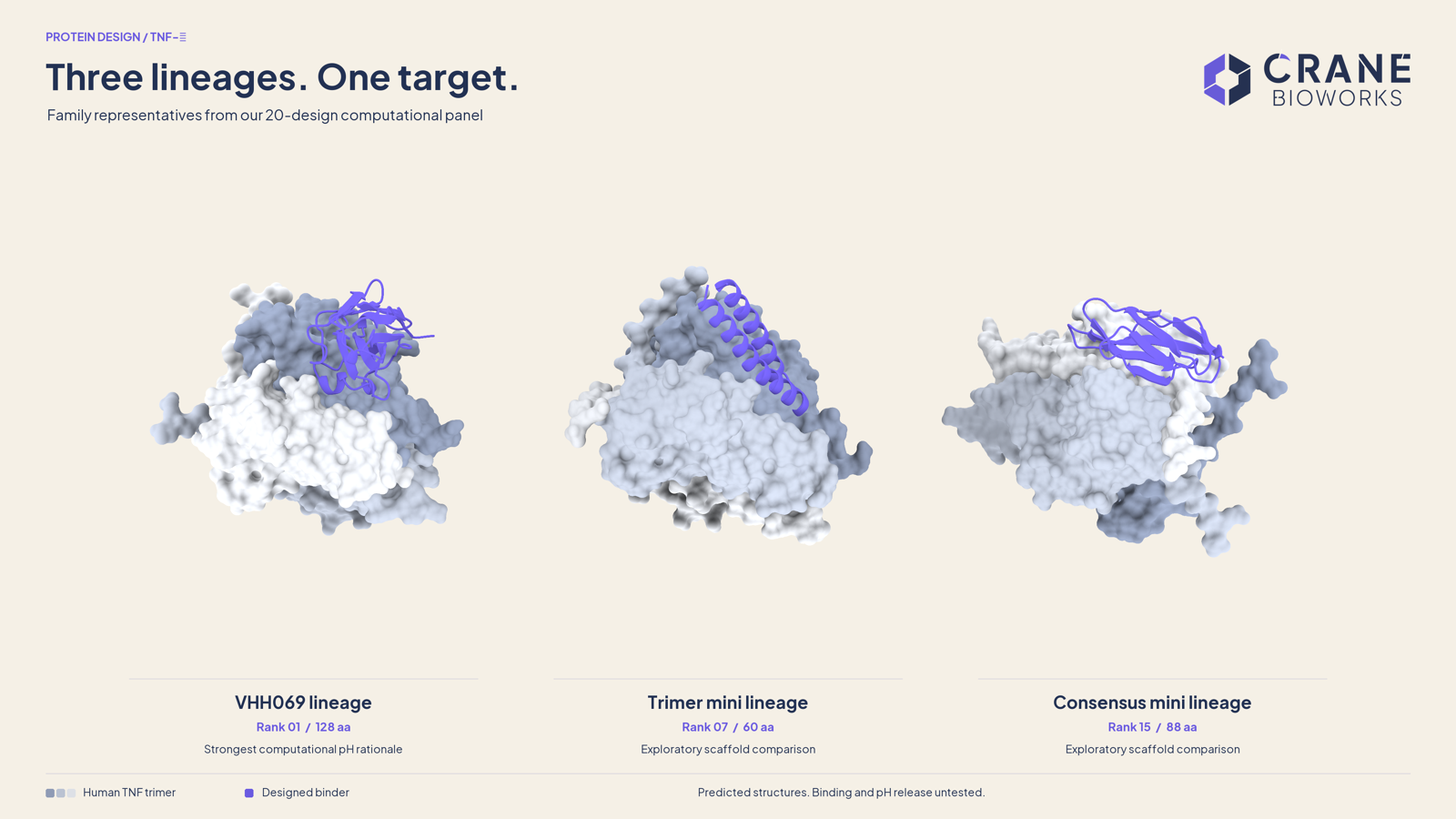
Crane Bioworks prepared twenty TNF-alpha binder sequences for the Anthropic x Adaptyv conditional binding challenge. See how 1,402 designs became one lead lineage with a repeated chemical rationale for pH-dependent release. We expect to see the pH effect when lab testing arrives.
Oct 2026
Technical study
ESMFold2 Binder Design: Confidence Meets Receptor Context
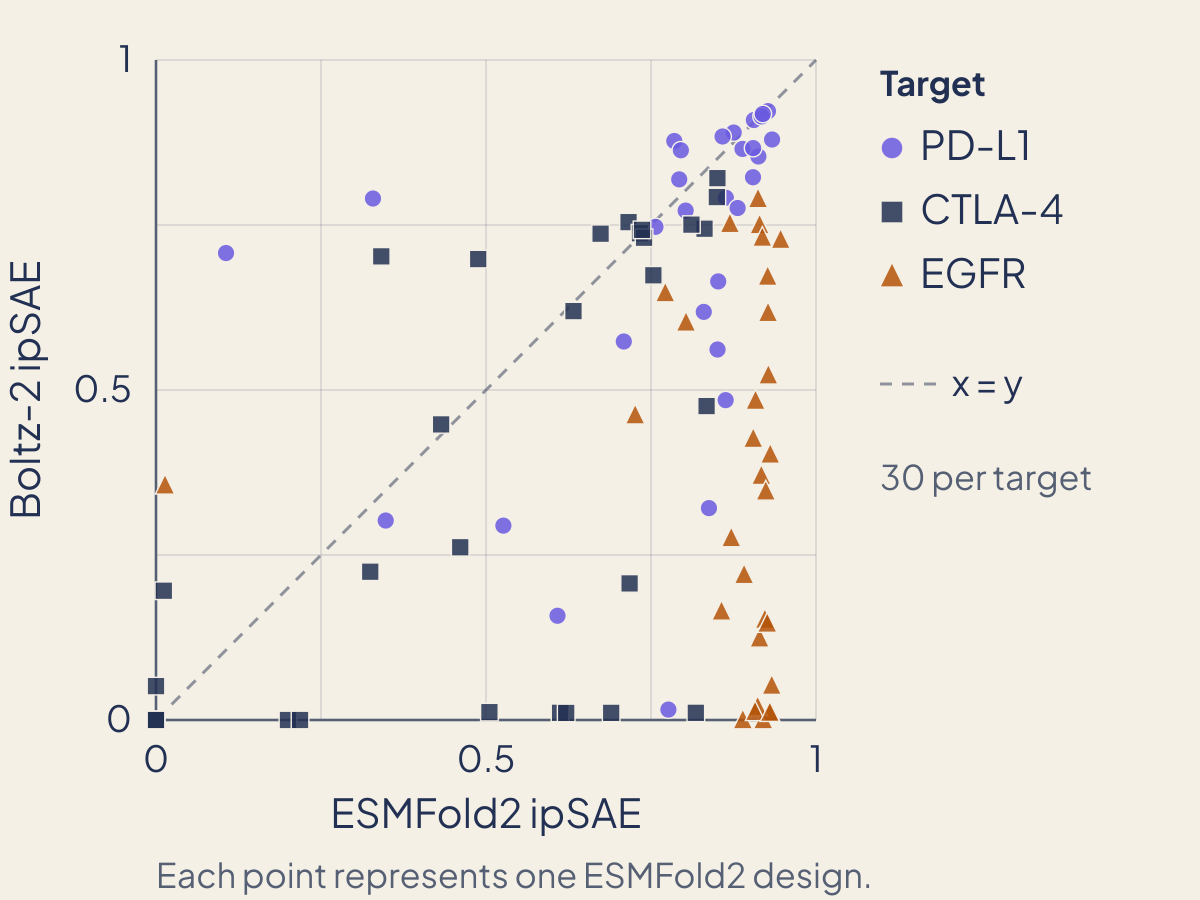
Boltz-2 corroborates high confidence for ESMFold2-designed PD-L1 binders by ipSAE scoring. Results across three targets show why cross-model assessment and receptor context matter; binding remains experimentally unvalidated.
Oct 2026
Technical study
Designing EGFR Binders for Two Species and Two pH Conditions
Crane Bioworks submitted 11 miniproteins and 9 nanobodies from a 1,136-sequence discovery pool to the Anthropic x Adaptyv EGFR challenge. Explore the strategy and interactive structures while we await selection for lab testing.

Sep 2026
News
BindCraft 2: A Broader Brief, a Closer Look at the Scores
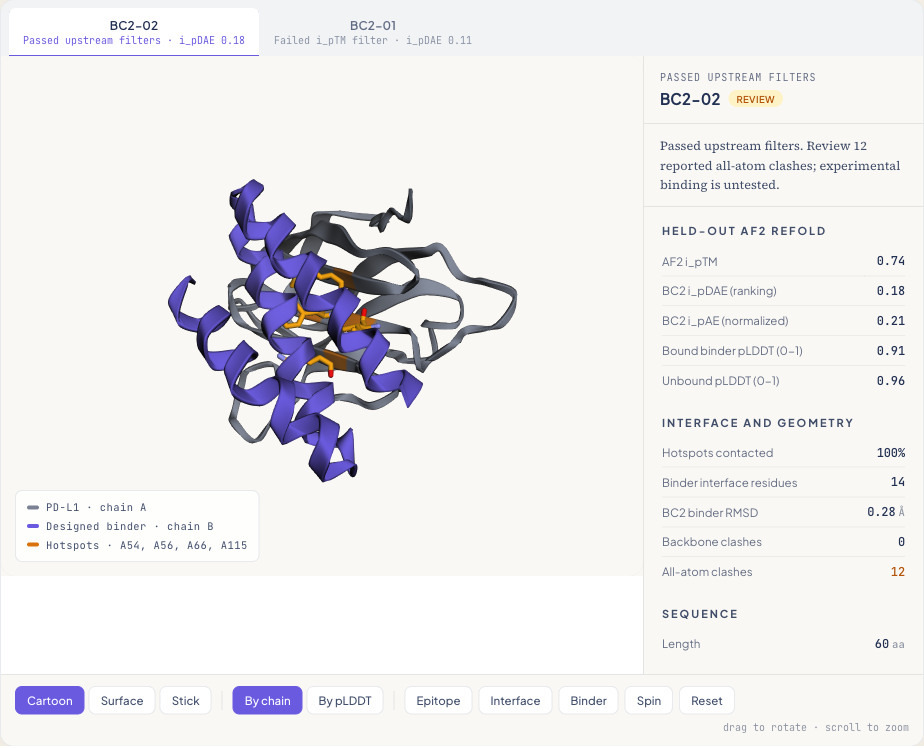
A PD-L1 integration run explains what changed from BindCraft 1 to 2, what i_pDAE measures, and why computational acceptance still needs structural and experimental review.
Sep 2026
Technical study
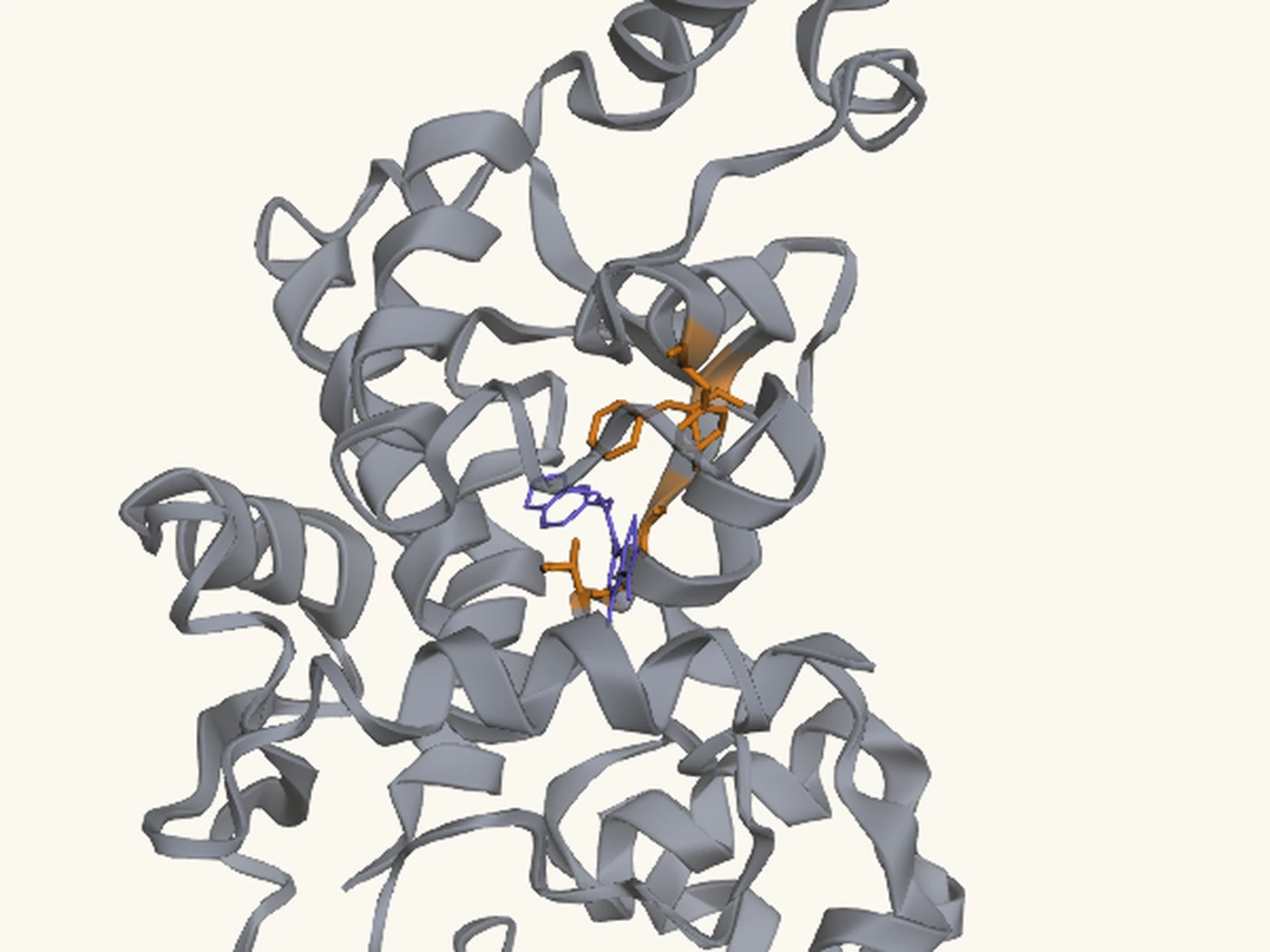
Ranking Cryptic Pockets from Closed Structures
A frozen-protocol test of cryptic-pocket detectors on SMURF1 and hnRNPA1 apo structures: converging calls at ranks 2 and 3 on one target, and top-five hits in two different places on the other.
Sep 2026
Technical study
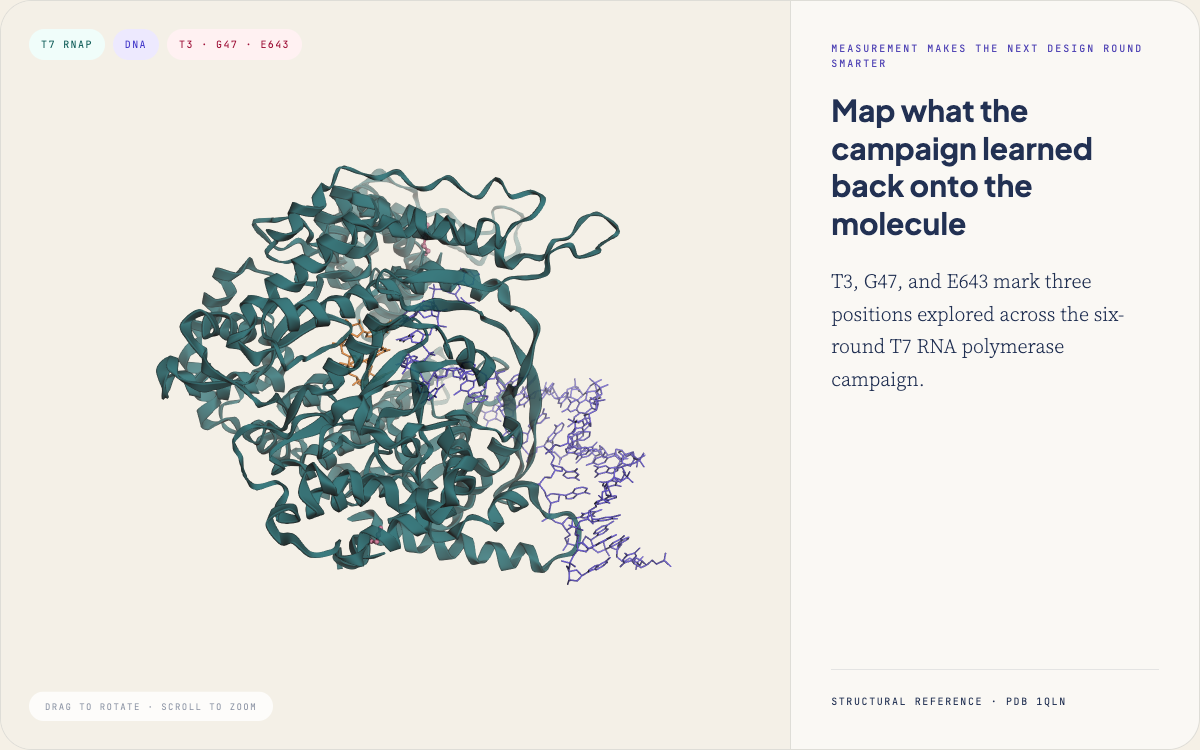
The Next Round Starts with the Assay
A six-round EVOLVEpro campaign shows how measured results, including a failed combination, change the next design decision for T7 RNA polymerase.
Sep 2026
News
Reading Anthropic's Binder Data: Beyond the Hit Rate
We examine Anthropic's public binder data for what it reveals about iteration, predictor consensus, and the hard targets behind the pooled hit rate.

Sep 2026
Technical study
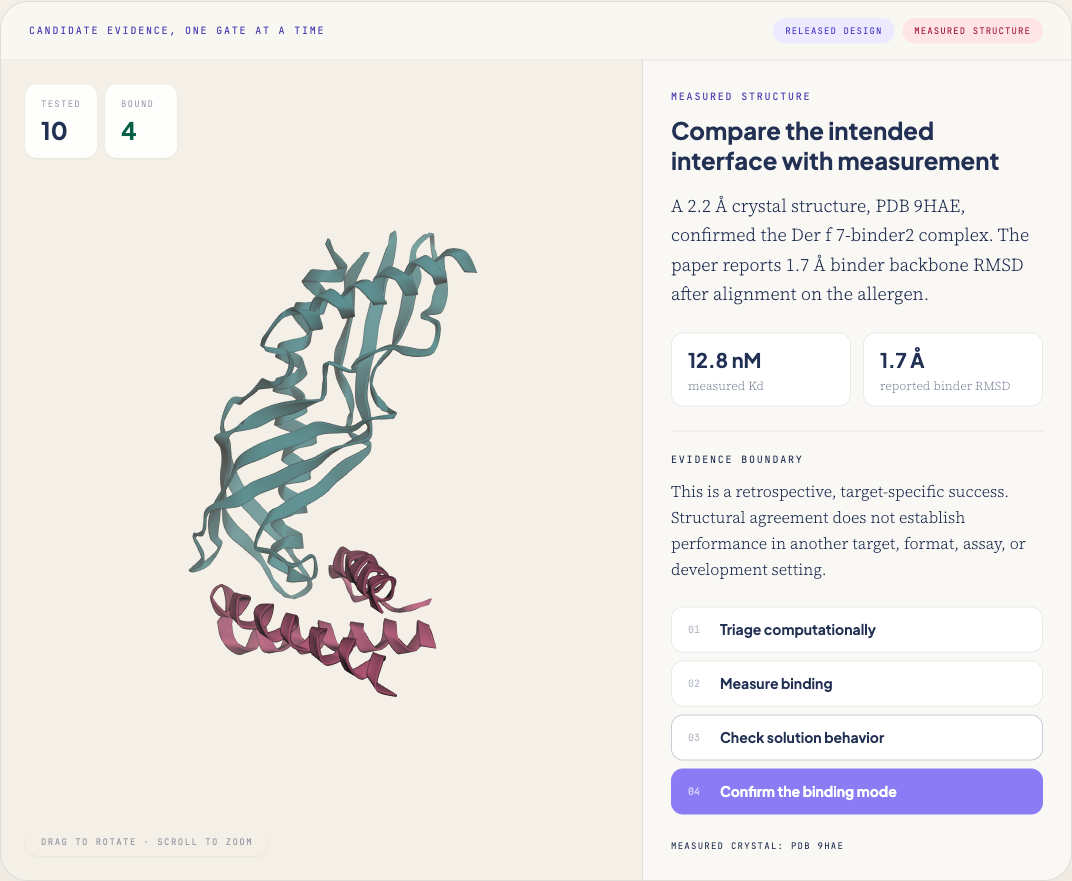
When a Binder Earns the Next Experiment
Four of ten tested Der f 7 designs bound in the BindCraft study. See how affinity, solution behavior, and structure inform different candidate decisions.
Aug 2026
Technical study
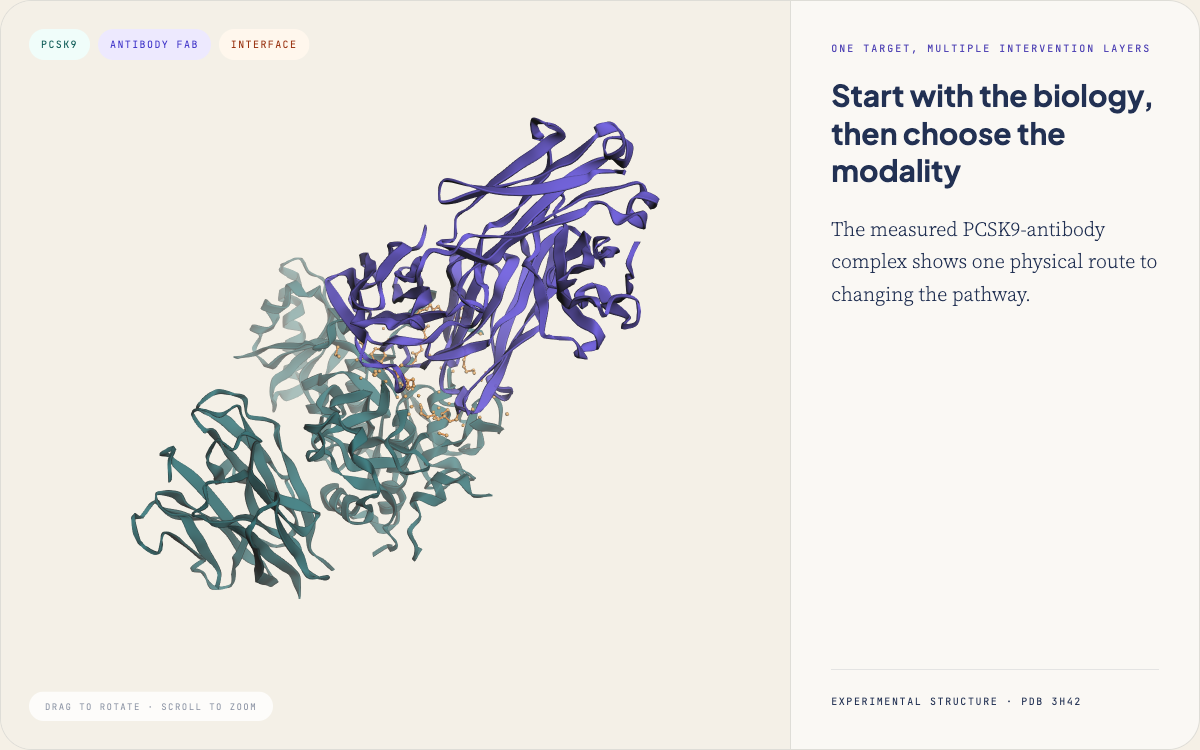
One Target, Three Development Strategies
Antibodies, siRNA, and macrocyclic peptides offer different routes to PCSK9 biology. Compare the design, delivery, and evidence questions each creates.
Aug 2026
Technical study
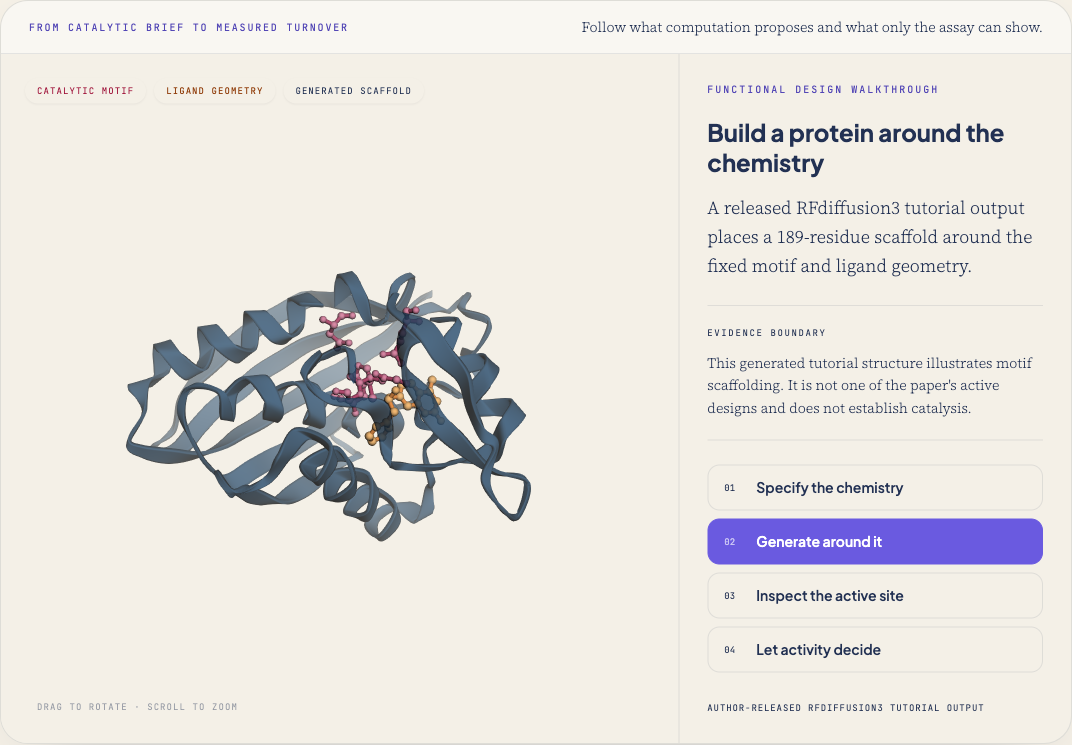
Design the Chemistry Before the Scaffold
A published RFdiffusion3 screen found 35 multi-turnover enzymes among 190 designs. Follow the evidence from catalytic geometry to measured function.
Sep 2026
News
Crane Bioworks AI Monthly / 2026.09
A Broad Institute team redesigns proteins before directed evolution and reaches 79x higher specificity with better stability and expression, a discriminator steers inverse folding toward the stability/solubility Pareto front, alternate translation start sites turn out to flip a protein's stability, and a sparse-data active-learning framework pushes a compact genome editor to 97% efficiency.

Aug 2026
News
Crane Bioworks AI Monthly / 2026.08
A stability-guaranteed enzyme library turns 12 variants into an 11.8x activity gain, an aggregation predictor gets checked against 41 real test cases, codon choice becomes a solubility lever, and Basecamp Research and P&G keep betting on extremophile data for cold-water enzyme stability.
Aug 2026
Technical study
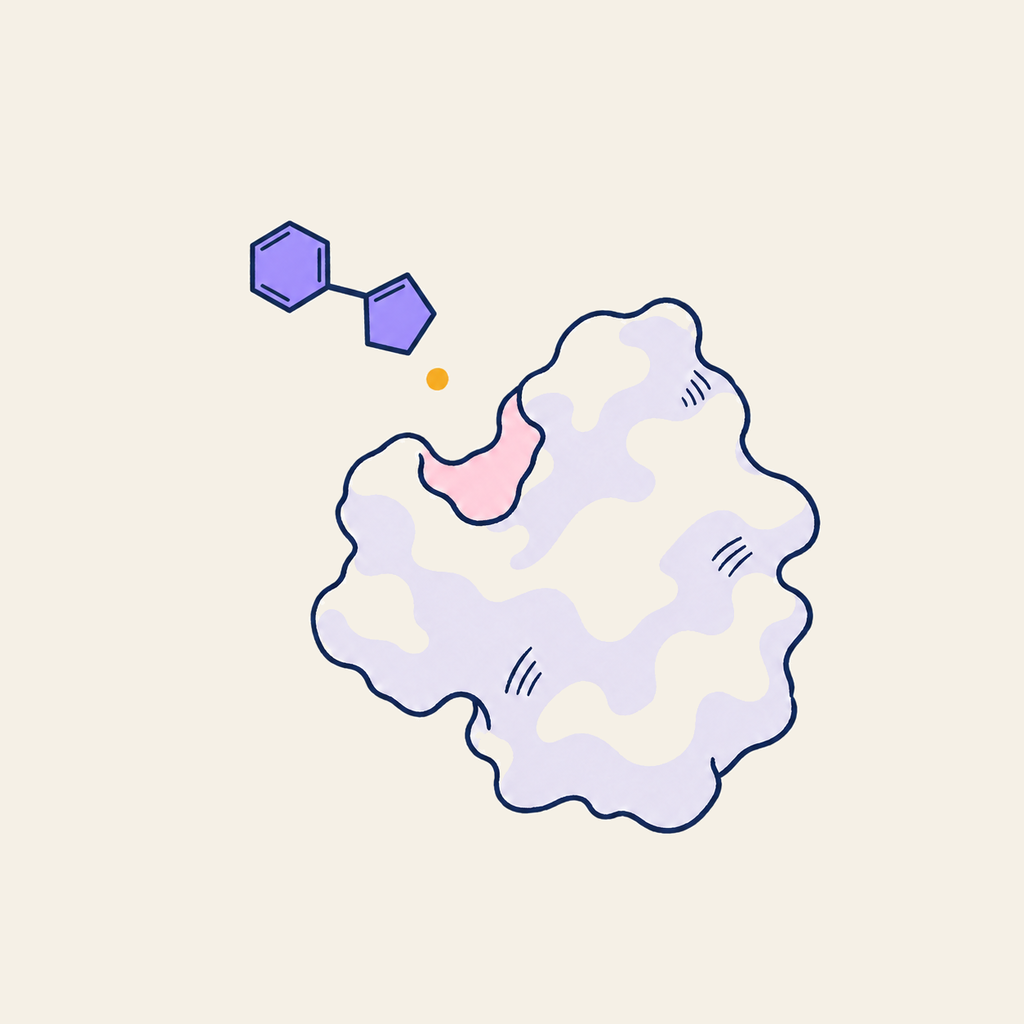
Exploring Boltz for Molecular Complexes
Explore the ligand poses Boltz recovered, the cases it missed, and separate protein-partner ranking studies, with interactive structures and the evidence limits alongside the results.
Aug 2026
Technical study
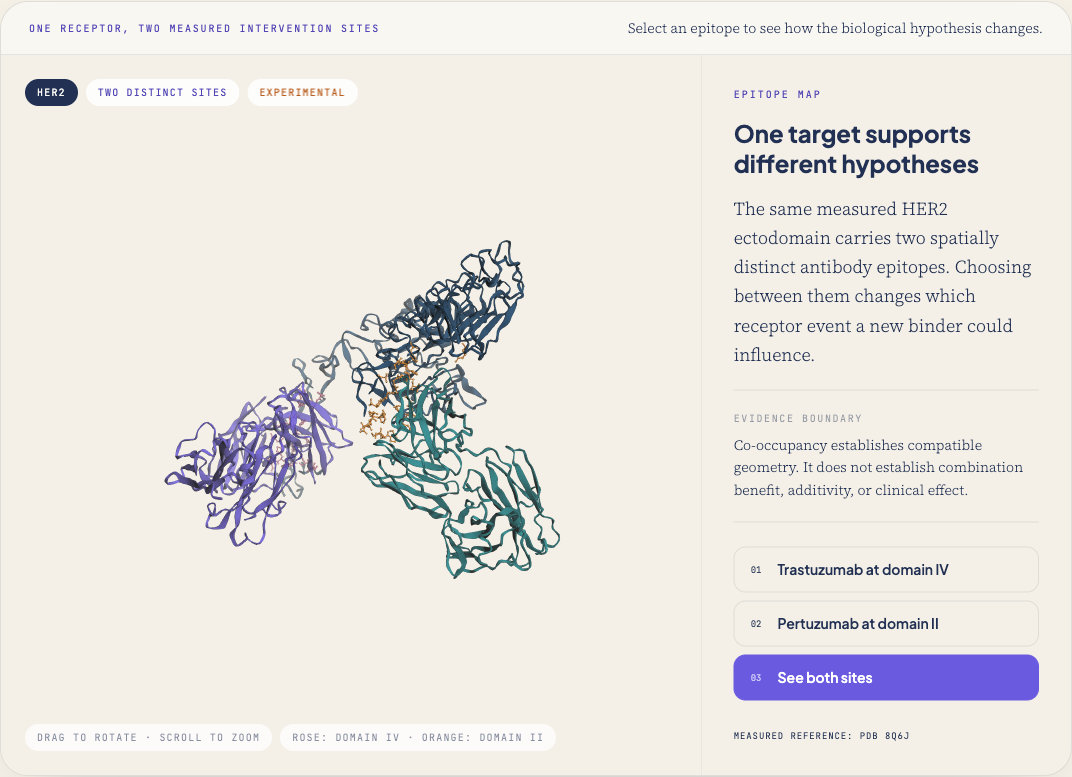
Choose the Site Before the Binder
Trastuzumab and pertuzumab bind different HER2 surfaces. Their measured structures show why the site belongs in the brief before affinity optimization.
Jul 2026
Technical study
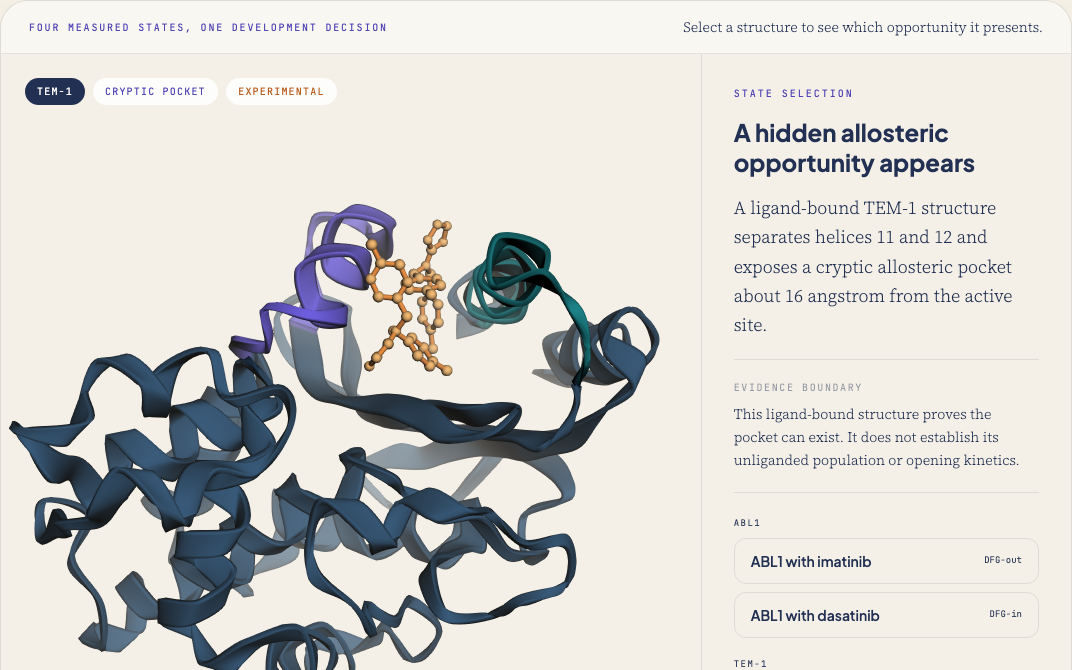
The Target Changes Shape
Measured ABL1 structures show why choosing a conformation is a program decision. A predicted alternative still needs experimental support.
Aug 2026
Technical study
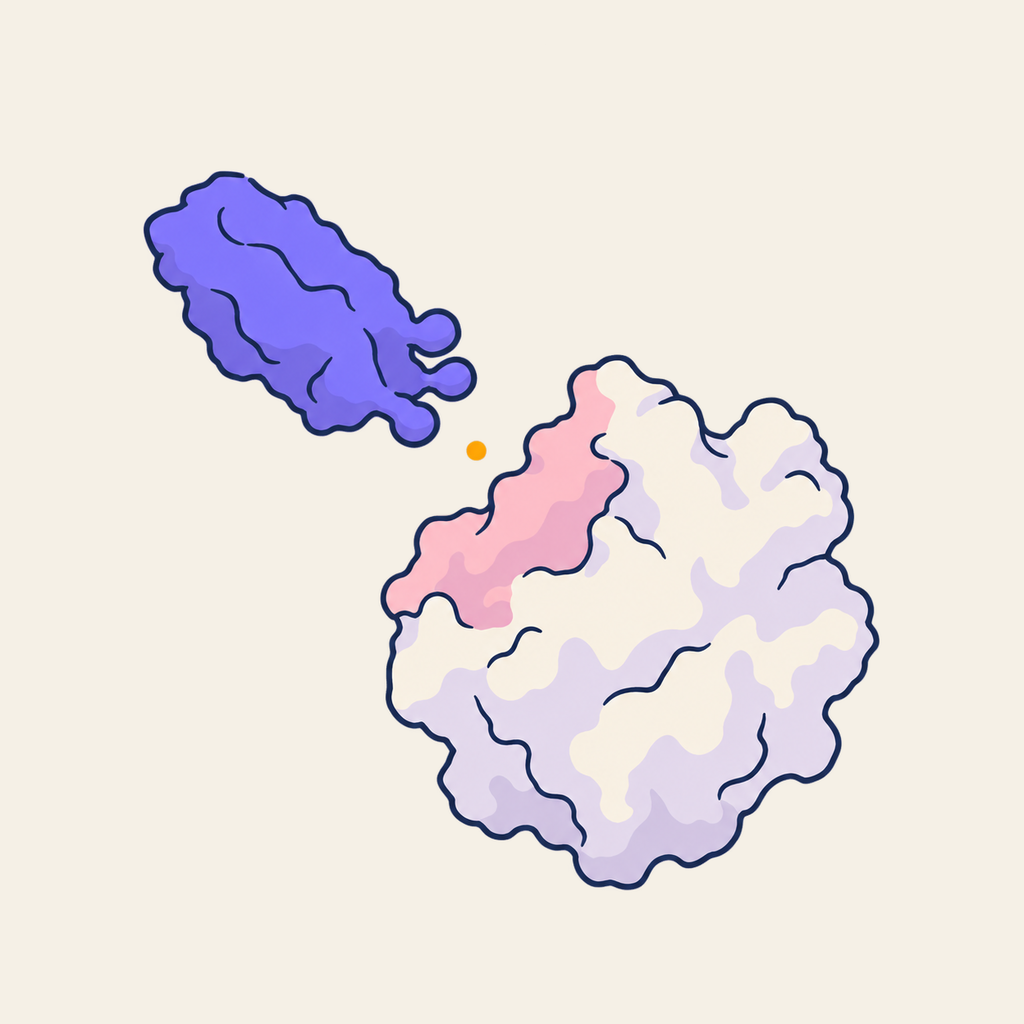
Exploring ESMFold2 for Nanobody Complexes
A five-complex exploration of ESMFold2 from sequence alone: three high-quality interfaces, seed-dependent outcomes, and difficult poses that show where closer inspection is needed.
Jul 2026
Technical study
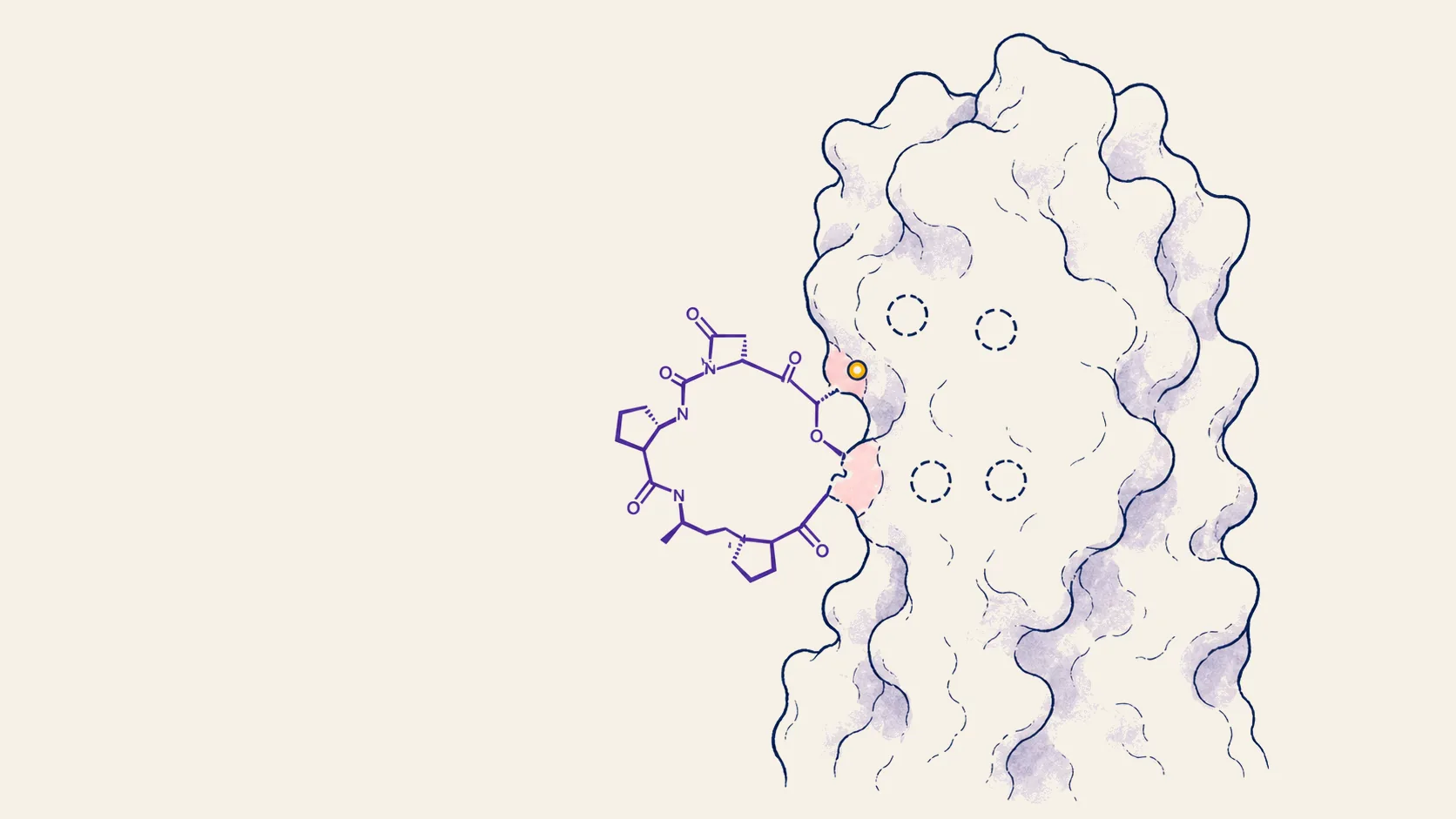
Finding a Cyclic Peptide at the Right PD-L1 Address
An 11-design cyclic-peptide campaign on Crane advanced three computational leads, with p104 providing an independent measured-affinity and 5 Å contact reference.
Jul 2026
Technical study
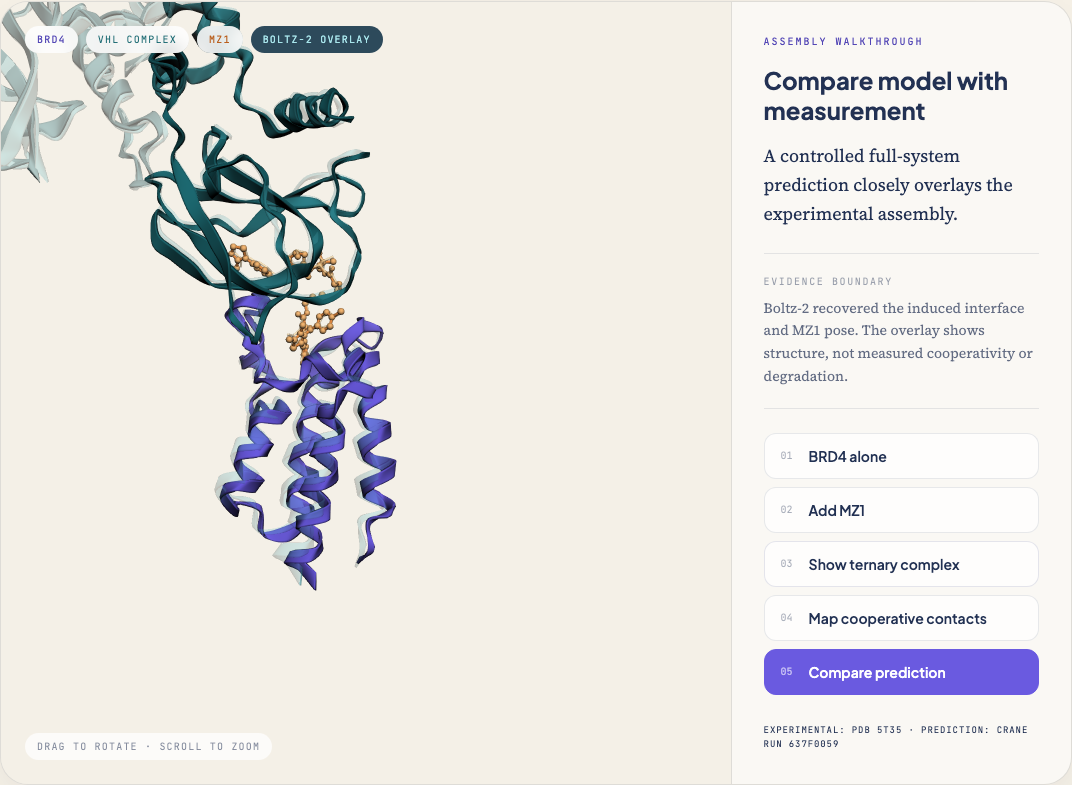
Map the Molecular System
Crane compared two assembly definitions for a known BRD4 complex. Both recovered the interface; adding partners did not consistently improve the scores.
Jul 2026
Technical study
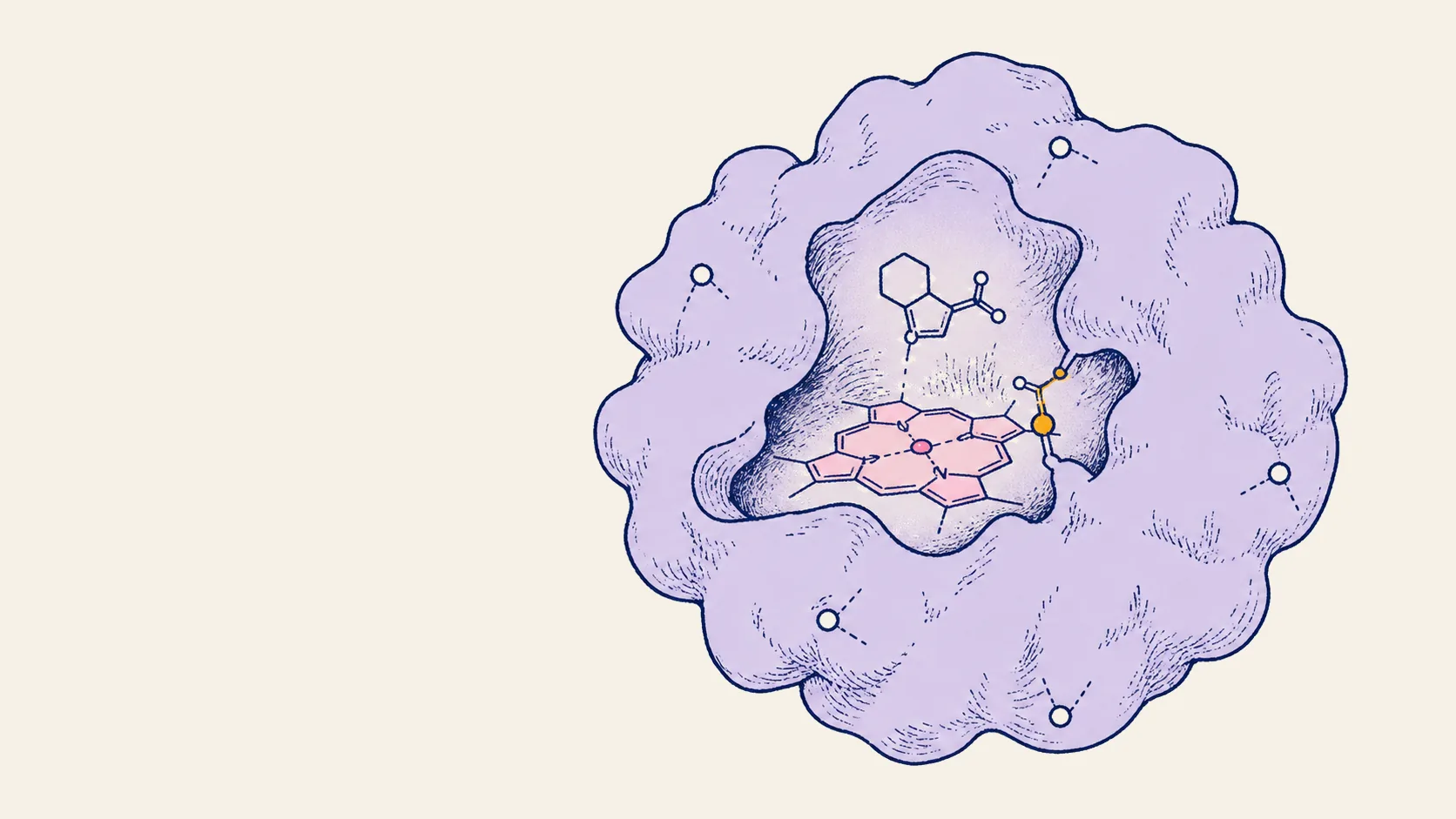
What Structure Adds When Sequence Scores Miss
A small publication-date holdout shows where sequence-derived kinetics scores fall short, and how explicit structure can make variant decisions more inspectable without replacing wet-lab validation.
Jul 2026
News
Crane Bioworks AI Monthly / 2026.07
A de novo protein 'wrap' solubilizes membrane proteins without detergent, a 160-antibody map shows what bispecific developability inherits from parental mAbs, a nanobody is tested in Alzheimer's brain tissue, and four stability tools face a closer look.
Jun 2026
News
Crane Bioworks AI Monthly / 2026.06
Seven items from the June cycle: de novo enzymes at 90°C, the largest open stability dataset to date, +7.2°C Tm on NanoLuc, a sequence-only ΔΔG predictor that respects thermodynamics, a tool to separate stability from function in PLMs, the first nanobody-specific developability profiler, and a 4-7× round-reduction benchmark from industry.
May 2026
Technical study
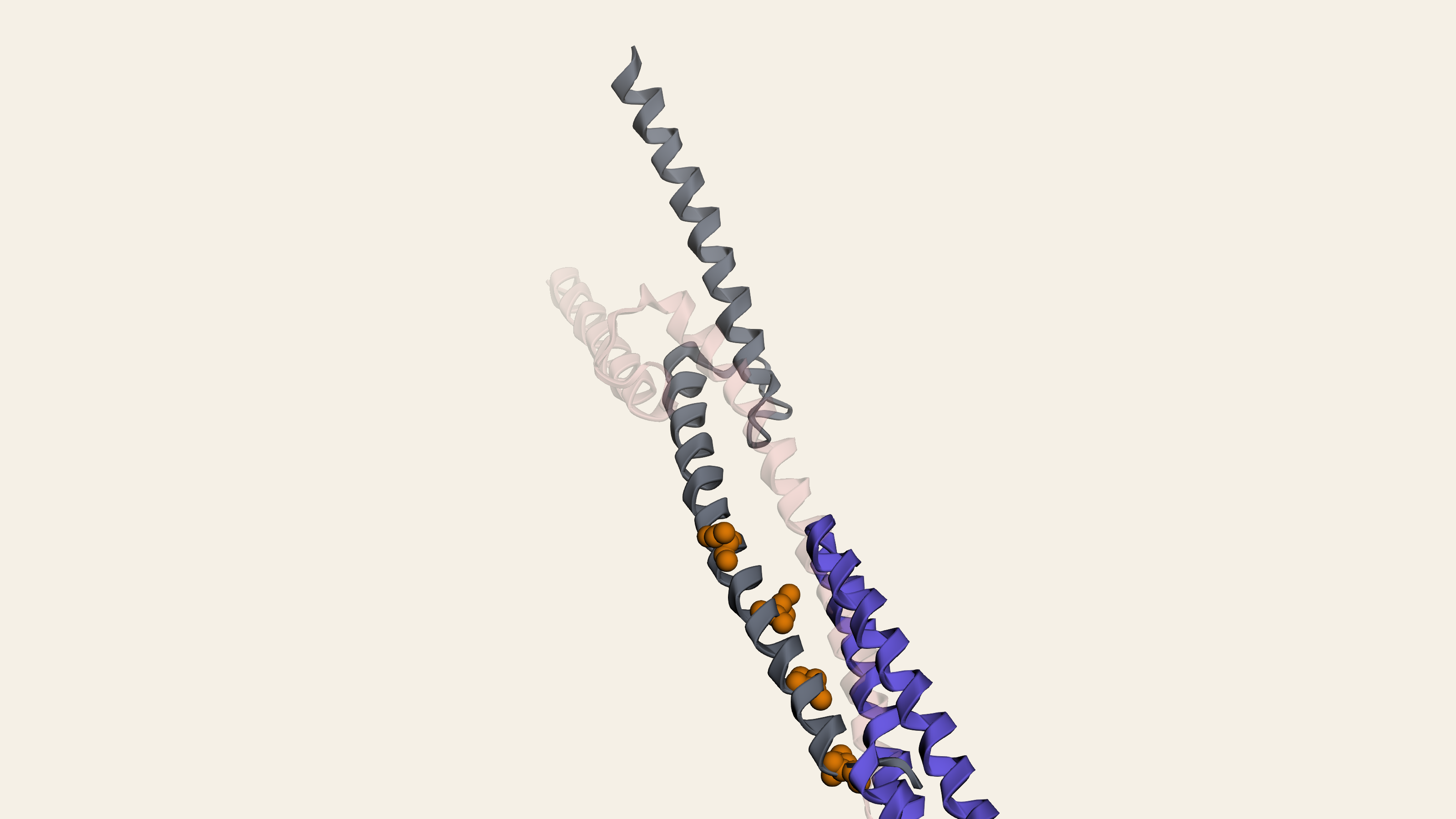
De Novo c-Myc Binders That Occlude the Myc·Max Interface
Ten de novo miniprotein binders, designed in one week and triangulated across three orthogonal structure models, occlude the c-Myc surface that Max uses to form the oncogenic Myc·Max heterodimer. Computational only, ready for wet-lab handoff.
May 2026
News
Crane Bioworks AI Monthly / 2026.05
Nine papers with real wet-lab numbers: validated Tm shifts, simultaneous stability-activity wins, new ΔΔG tools, and an honest benchmark on how much antibody developability AI currently gets right.
May 2026
Technical study
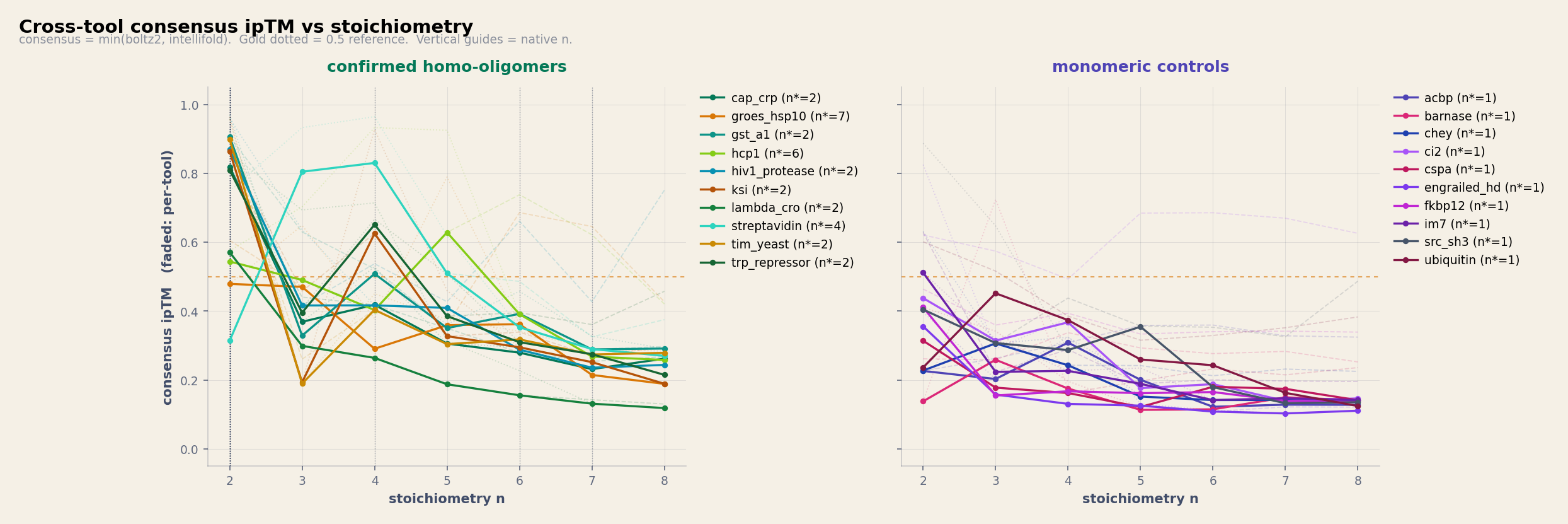
Educated Calls on Homo-Oligomerization With Cross-Tool Consensus
On a 20-protein pilot (10 confirmed homo-oligomers + 10 monomeric controls), the lower of Boltz-2 and IntelliFold ipTM across an n=2..8 sweep gave a useful first-pass call on whether a protein forms a homo-oligomer. A cutoff near 0.47 captured 10/10 oligomers and excluded 9/10 monomers.
Apr 2026
Technical study
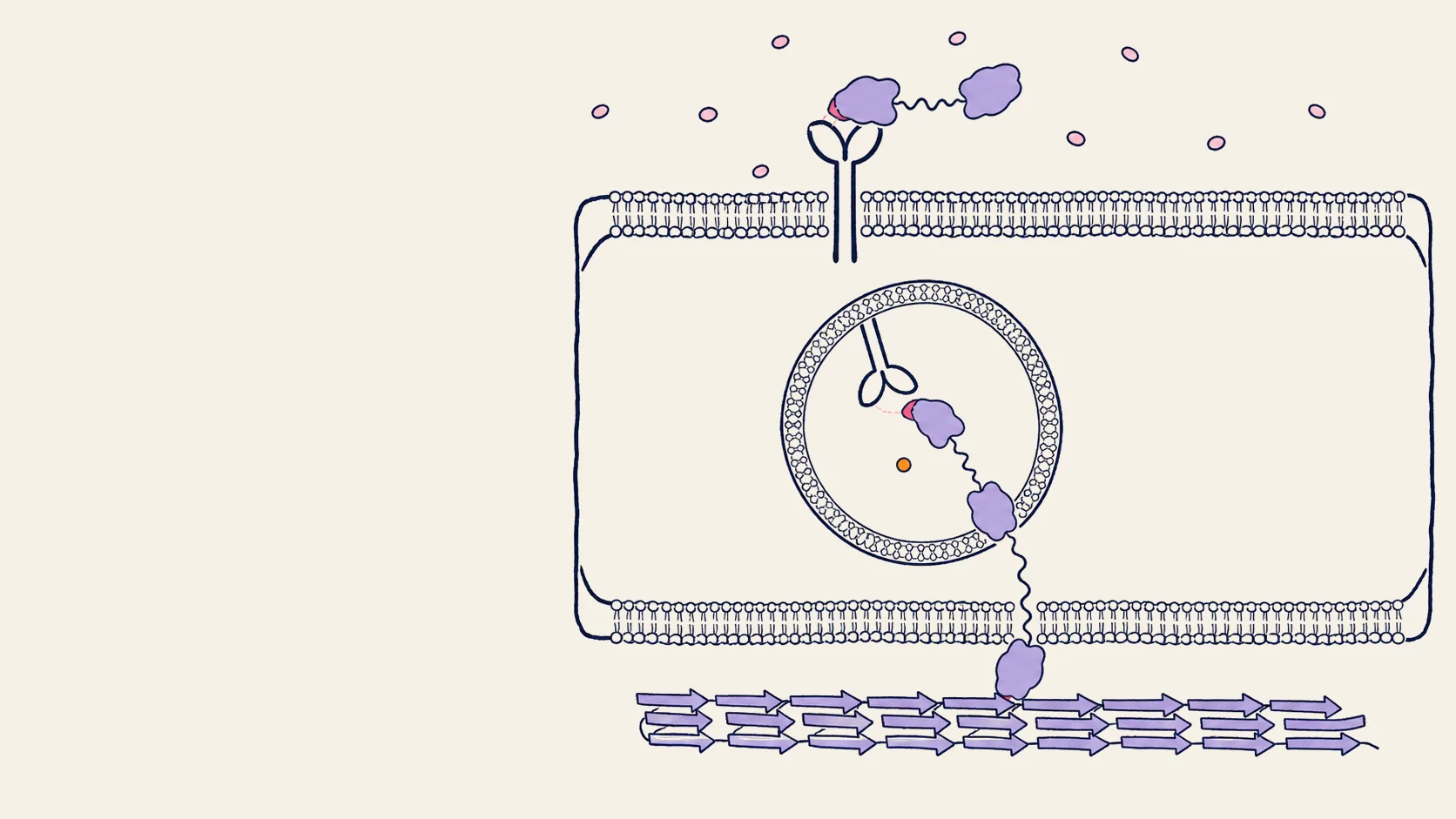
De Novo Nanobody Design for a Bispecific BBB Shuttle: 32 Variants to Synthesis
A computationally designed bispecific VHH panel: a TfR1-binding arm validated against the full receptor across two independent structure predictors, plus an alpha-synuclein fibril-binding arm. 100 candidates funneled to 32 synthesis-ready variants. Computational only: wet-lab validation pending.
Apr 2026
Technical study
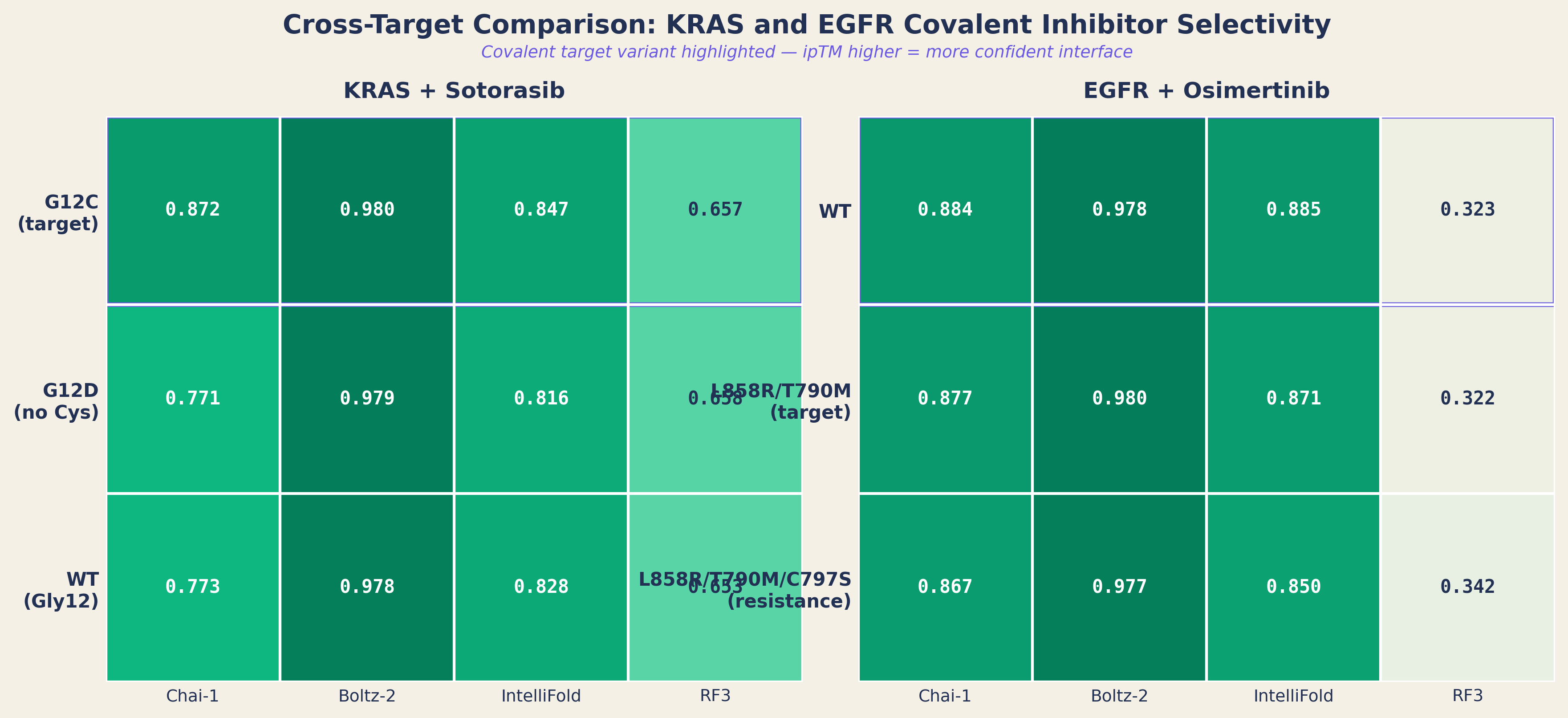
AI Models Can Tell You Which Scaffolds Fit, But Not Which Ones Are Selective
Tested across KRAS and EGFR, four co-folding models position ligands at covalent bond distance from reactive cysteines, but treat that geometry as acceptable, not reactive. The ~1 Å gap between 2.0 and 3.2 Å is where selectivity lives, and co-folding does not resolve it.
Mar 2026
Technical study
Seeing Stability at the Atomic Level
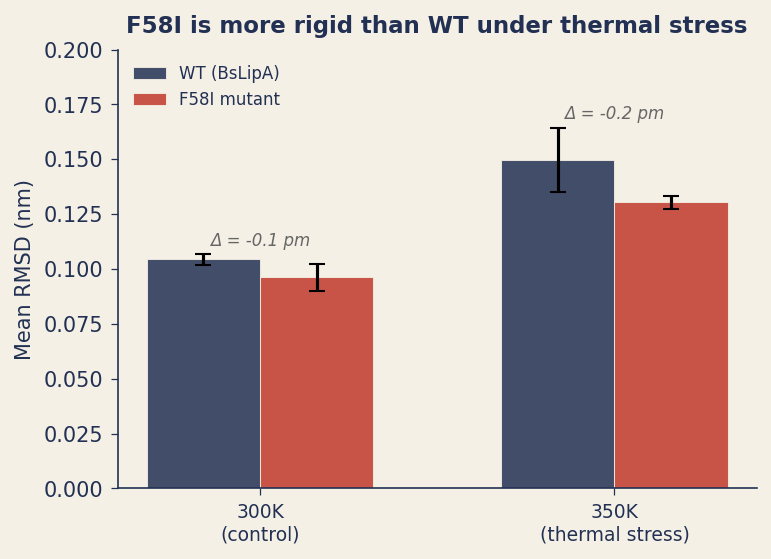
Over a microsecond of molecular dynamics probes the AI-predicted F58I stabilization of BsLipA: reduced conformational mobility, improved hydrogen bonding, and no active-site distortion.
Mar 2026
Technical study
Finding Stabilizing Mutations in a Classic Lipase Benchmark
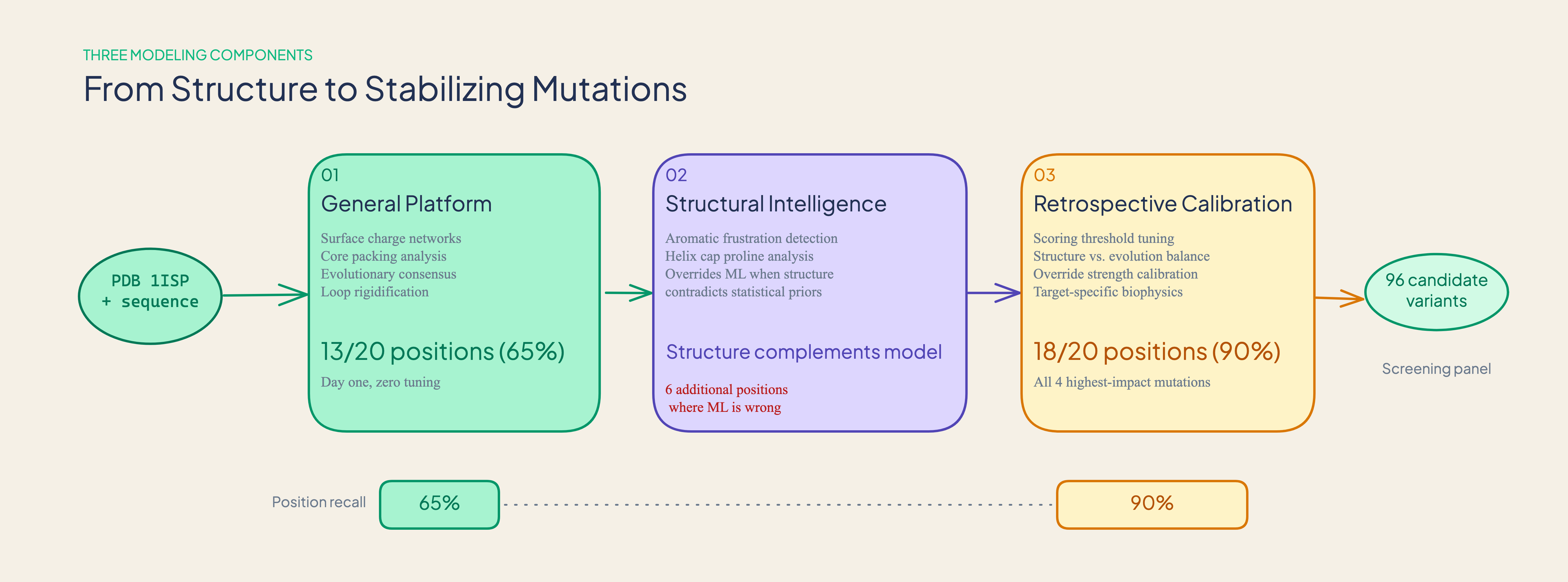
Recovered the majority of published stabilizing positions in a first round, then improved further through retrospective calibration.
Mar 2026
Technical study
Does Your Designed Protein Actually Stay Folded?
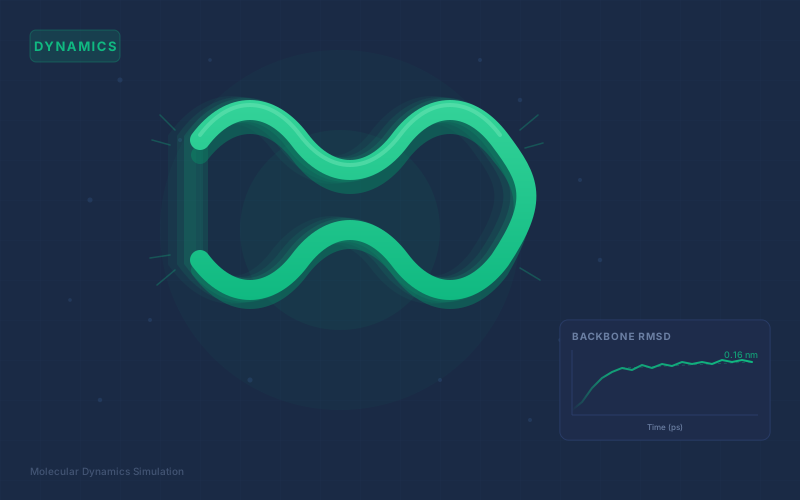
A fully automated molecular dynamics workflow for dynamic screening before wet-lab commitment.
Feb 2026
Technical study
Designing a Selective KRAS G12D Binder From Scratch
A selective binder candidate designed in silico, with a clear structural mechanism and explicit discussion of the remaining risk.