What Structure Adds When Sequence Scores Miss
In a small publication-date holdout, a sequence-derived kinetics model called only 1 of 6 published activity gains in the right direction. The hardest miss was CviUPO D9, a five-mutation variant with a nearly 97-fold increase in kcat. The wild-type structure helps make that miss mechanistically inspectable, but it does not replace prospective experiments.
- Evidence type
- Use Case
- Published
- July 2026
Where this leaves variant triage
- Signal
- One correct direction out of six says this score should be one input to variant triage, not treated as evidence that a mutation will improve turnover.
- Structural read
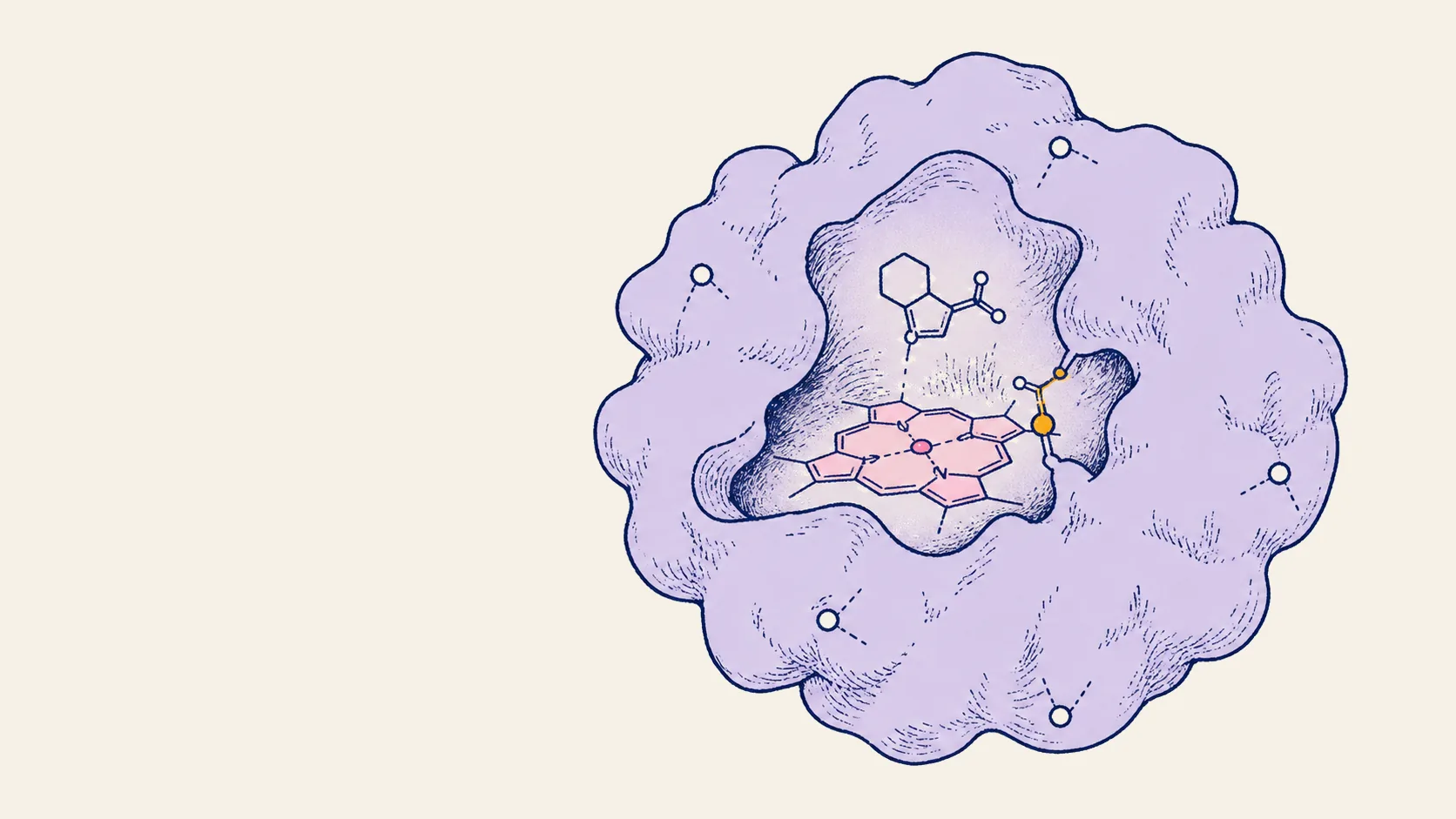
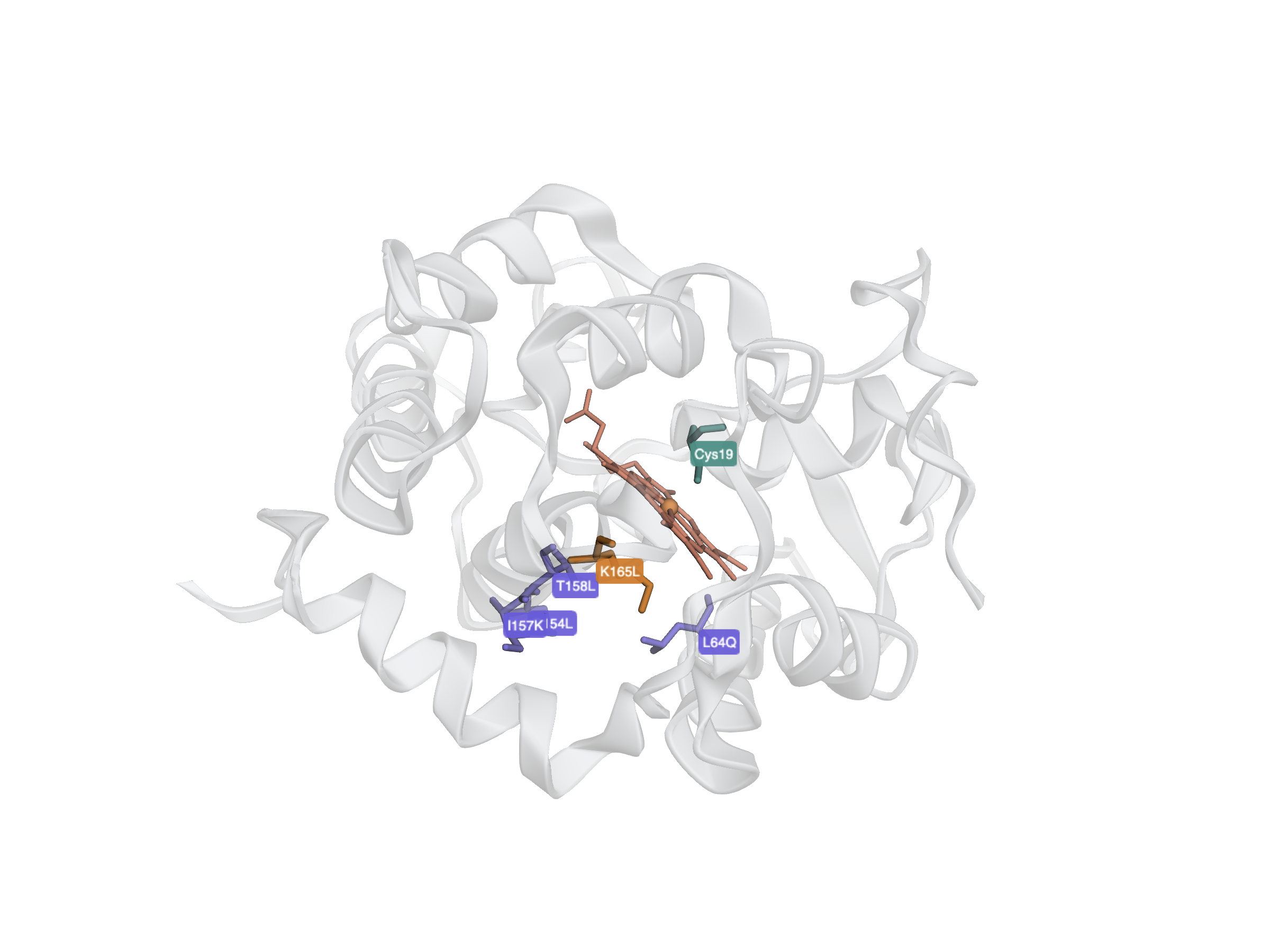
- The wild-type CviUPO structure places Lys165 beside the heme pocket. Gao et al. experimentally identified K165L as critical within D9 and found that the other four substitutions also contribute through epistasis.
- Boundary
- Crane performed a retrospective computational review. The published authors performed the experiments and modeled the D9 mutant; PDB 7ZCL is the wild-type crystal structure.
What a CSO can act on
The practical question is not “Which model wins?” It is “What evidence earns a variant a place in the next experimental panel?” This case supports a three-part decision rule:
- 01
Filter. Use sequence-derived scores to flag obvious losses and to compare candidates consistently.
- 02
Inspect. Use explicit coordinates to check pocket geometry, catalytic constraints, burial, and plausible interactions.
- 03
Test. Select a small, mechanistically diverse panel and let wet-lab data decide what improves the enzyme.
Structure narrows and explains hypotheses. It does not make the experimental result certain.
Why this benchmark matters
We assembled six published beneficial variants across five enzymes. Their papers appeared after the 2024 EITLEM publication, creating a simple publication-date holdout. EITLEM combines an enzyme sequence representation with a molecular representation of the substrate; it does not receive explicit protein coordinates.
Only MwoAT L175G was called in the correct direction. That is a useful warning, but it is not a general estimate of model accuracy: six variants are too few, and the enzymes, substrates, assays, and units are heterogeneous. The benchmark is a directional stress test, not a prospective validation study.
The hardest miss: CviUPO D9
In the most pronounced case, CviUPO D9 increased reported kcat from 0.43 to 41.52 s−1 (nearly 97-fold) in the assay reported by Gao et al. in Science Advances. The EITLEM score moved slightly in the opposite direction.
D9 contains five substitutions: L64Q, Q154L, I157K, T158L, and K165L. Gao et al. tested their contributions and identified K165L as critical, while showing that K165L alone did not reproduce the full D9 performance. That is evidence of an epistatic design, not a single-mutation explanation.
What the structure can (and cannot) say
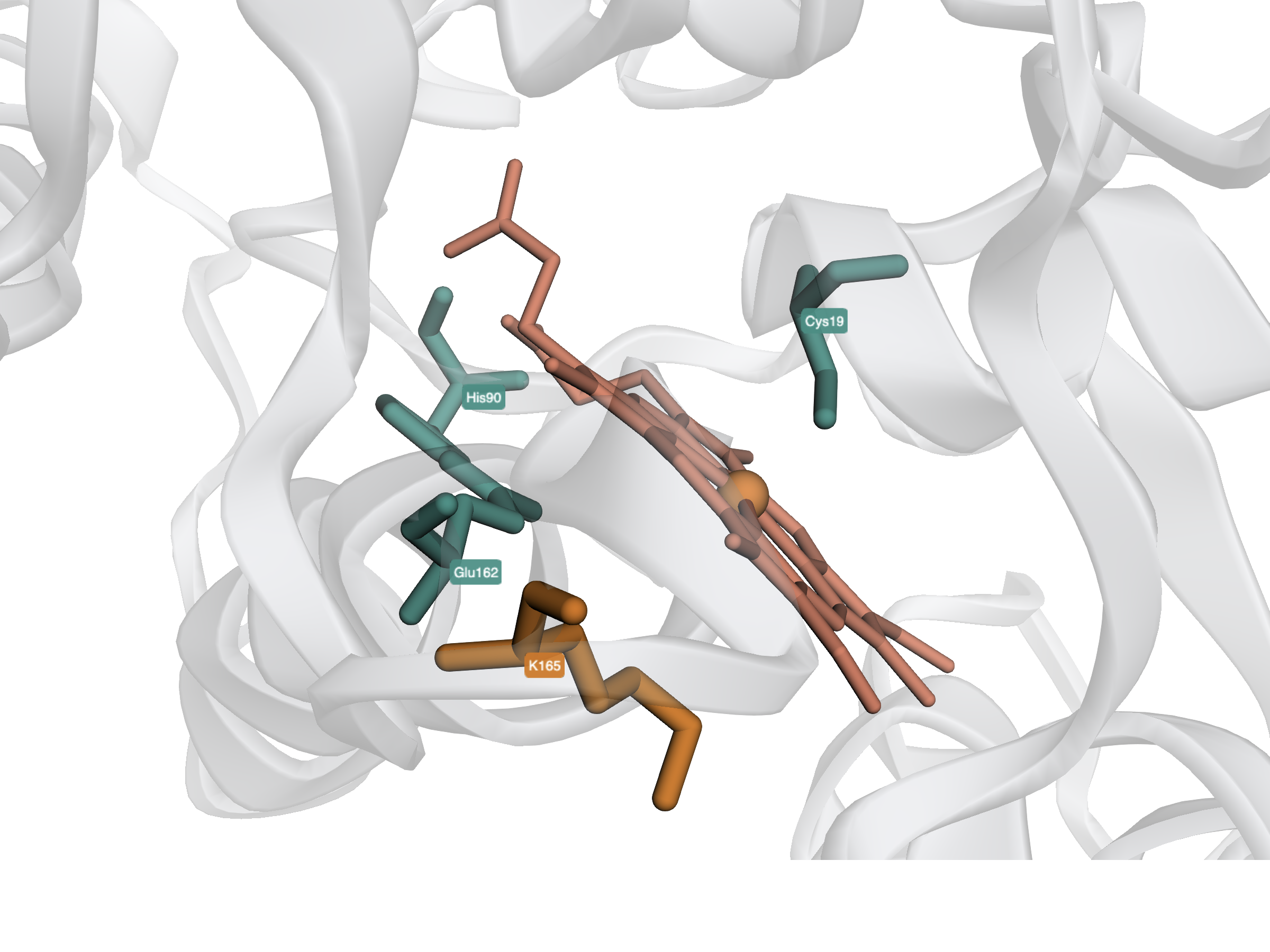
The deposited 7ZCL structure is wild-type CviUPO. It places Lys165 beside the heme pocket and makes the local geometry directly inspectable. It also places the Cys19 sulfur 2.34 Å from the heme iron, consistent with Cys19 acting as the proximal ligand.
Those coordinates do not, on their own, prove why D9 is faster. Gao et al. built a D9 model from 7ZCL and used molecular dynamics alongside experimental deconvolution to support a pocket-reshaping mechanism. The appropriate conclusion is therefore layered: the crystal locates the relevant geometry, the experiments establish the activity gain and epistasis, and the mutant simulations support a mechanistic interpretation.
The wild-type crystal locates the question. Published experiments establish the effect; mutant simulations support a mechanism.
Map constraints before chasing gains
Structural context is also useful for identifying high-risk positions. The primary structural study describes Cys19 as the fifth ligand to the heme iron and proposes that His90 and Glu162 contribute to peroxide activation. Those roles make the three positions sensible “do-not-touch until tested” constraints, not proof that every possible substitution would abolish activity.
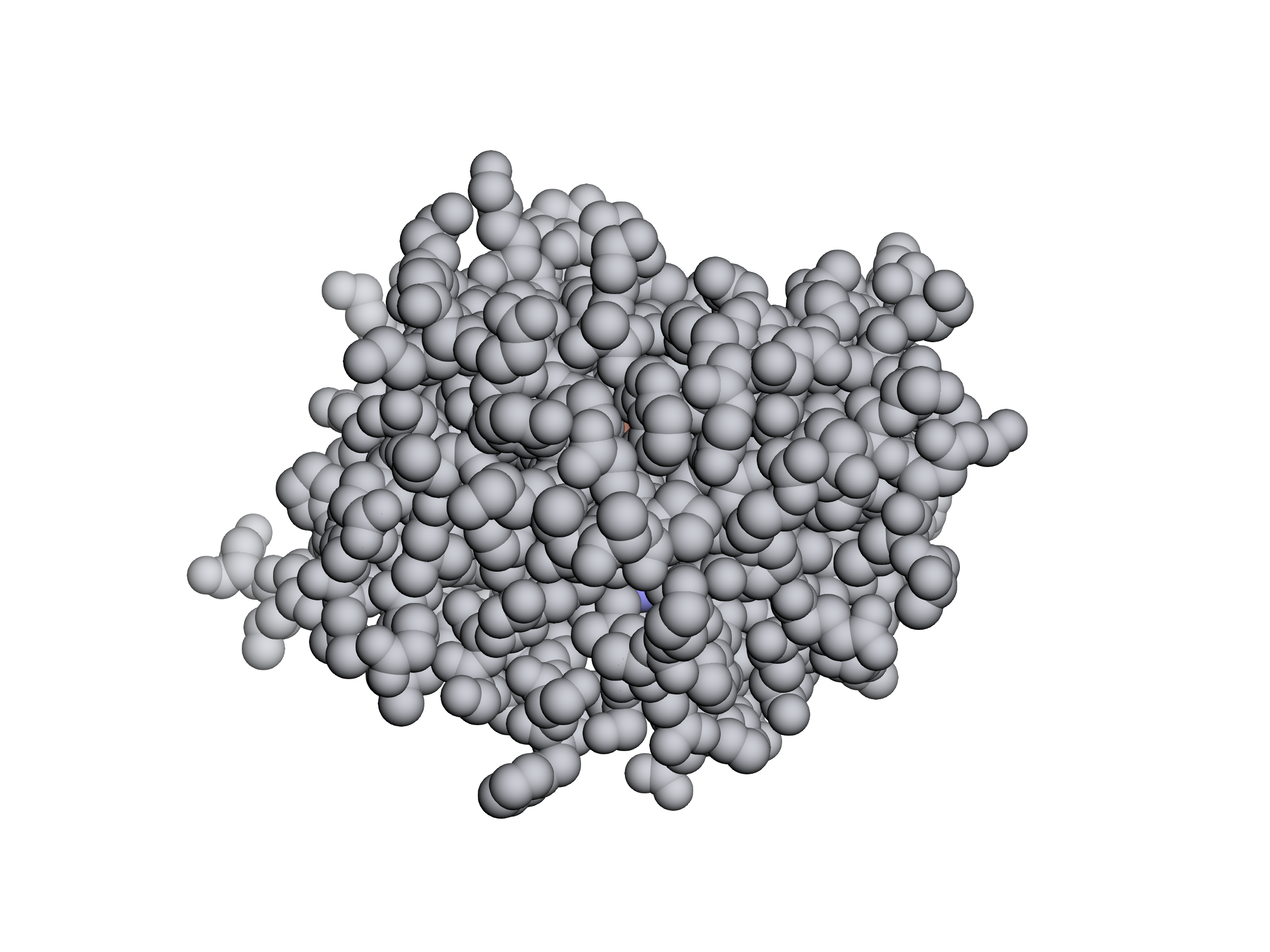
Sequence models can infer burial, contacts, and local context from evolutionary patterns. Explicit coordinates add something more auditable: the measured arrangement of a residue relative to the cofactor, catalytic residues, and pocket. That makes it easier to distinguish a model score from a mechanistic hypothesis.
Six published gains, one correct direction
Published values retain the precision reported by each source. Because assay conditions and units differ, the rows should be read as six separate directional checks, not as a cross-enzyme ranking.
CviUPO D9
Reported turnover assay; five-mutation variant
0.43 → 41.52 s−1 (nearly 97×)
Missed: predicted a small decrease
Gao et al., 2026MwoAT L175G
Transaminase turnover assay
236 → 319 min−1 (1.35×)
Correct direction
Yang et al., 2025AaFS L326I
β-farnesene synthase turnover
0.174 → 0.272 s−1 (1.56×)
Missed: scored near-flat
Wang et al., 2025AaFS M433I
β-farnesene synthase turnover
0.174 → 0.249 s−1 (1.43×)
Missed: scored near-flat
Wang et al., 2025Rubisco T398A
Carboxylation turnover assay
≈17.9 → 35.84 s−1 (≈2×)
Missed: scored near-flat
Zhang et al., 2025AaMalI Y223H
Maltose (G2) hydrolysis
5.86 → 54.4 s−1 (9.3×)
Missed: scored near-flat
Auiewiriyanukul et al., 2026
Scope note: n=6, retrospective, and selected for published beneficial outcomes. This set cannot estimate prospective hit rate, sensitivity, specificity, or cost savings.
Where a structure-aware review helps
This approach is most useful when your team already has a target, assay, and design question, but needs a more defensible experimental panel.
- Variant triage: compare candidates by both model score and structural mechanism before synthesis.
- Constraint mapping: flag catalytic, cofactor-binding, and load-bearing positions for conservative treatment.
- Pocket design: build distinct hypotheses for activity or selectivity rather than one undifferentiated ranked list.
- Capability audit: test what a predictive model does and does not resolve on your target and assay.
The output is not a promise that a variant will work. It is a focused, mechanism-linked panel that your wet-lab team can test and learn from.
Sources and scope
Crane’s work described here is retrospective and computational; no Crane wet-lab validation was performed. Experimental results and the D9 mutation analysis are from Gao et al., Science Advances (2026). The deposited coordinates are the unmutated CviUPO structure PDB 7ZCL. Catalytic-role wording follows the primary structural characterization. Other experimental sources are linked in the benchmark rows.